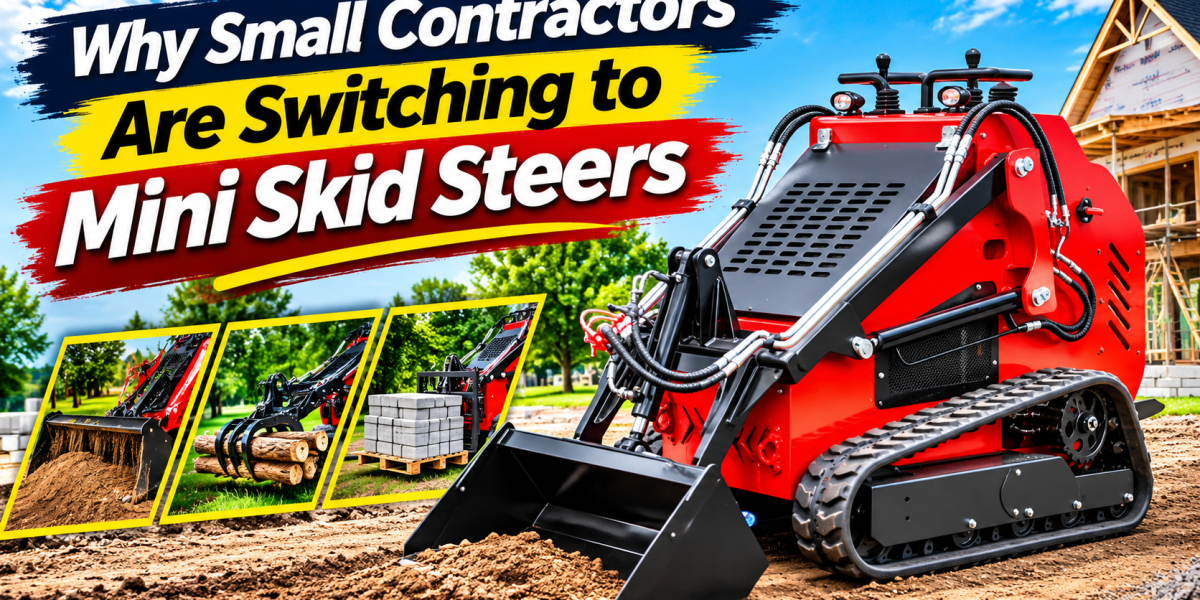
Why Small Contractors Are Switching to Mini Skid Steers
Let’s be honest for a second. If you’ve spent any time working as an independent contractor, you know the daily struggle of choosing between two awful options: breaking your back doing things by hand, or spending a small fortune renting massive equipment that barely fits on the job site. But lately, things have changed. Small contractors are ditching both extremes and jumping on the mini skid steer bandwagon.
These compact utility loaders are absolutely reshaping how independent crews tackle landscaping, hardscaping, and residential construction. When you’re running a small business, time literally equals money. You can’t afford to waste hours figuring out logistics. Mini skid steers have become the ultimate problem solvers, offering the muscle of heavy machinery packed into a footprint that makes sense for modern jobs.
- Filling the gap: They sit right in the sweet spot between exhausting manual labor and the crazy overhead of running full-sized excavators.
- Punching above their weight: Smaller crews can now confidently bid on massive, multi-step projects because they finally have the mechanical muscle to back them up.
- Speeding things up: You get the job done days or weeks faster. That means turning over more projects per season and seriously boosting your annual take-home pay.
Squeezing Into Tight Spots Without Wrecking Things
One of the biggest headaches in residential work right now is just getting to the actual dirt. Property lines are shrinking everywhere. Navigating a massive loader between houses, around fragile flower beds, and through a narrow side yard is basically asking for a disaster. Before mini skid steers came along, contractors were literally taking down fences just to get their equipment into a backyard.
These compact machines make that headache disappear. A lot of models run between 36 and 40 inches wide, meaning you can drive them straight through a standard pedestrian gate. And because they boast zero-turn agility, you can pivot the machine entirely within its own footprint. No more reversing blindly or struggling to reposition in a tiny trenching path.
- Beating the gate problem: You can roll right through standard backyard fences without wasting an entire morning pulling out fence posts and putting them back later.
- Spinning on a dime: Independent track controls let you pivot in place, making tight urban corridors incredibly easy to navigate.
- Avoiding the “oops” moments: Maneuvering around expensive hardscaping and mature trees is way safer, protecting the client’s property and keeping your insurance premiums happy.
The Ultimate Jobsite Swiss Army Knife
If you ask any small contractor why they finally bought a mini skid steer, they’ll probably talk about the attachments. When your capital is tied up, buying a machine that only does one specific task is a terrible business move. You need a jack-of-all-trades.
Thanks to universal quick-attach systems and seriously upgraded hydraulic power, these things transition from digging trenches to moving heavy pallets in seconds. You don’t need to tow five different machines to the site anymore. A landscaper can use the bucket to strip topsoil, switch to forks to unload a delivery of pavers, throw on an auger to drill fence posts, and then use a sweeper to clean the driveway before heading home.
- Swapping tools fast: The quick-attach plates mean you can change out buckets, augers, and trenchers in minutes without breaking out the heavy wrenches.
- Thinning out the fleet: Investing in one base machine and a trailer full of attachments saves you from buying, maintaining, and insuring multiple single-purpose rigs.
- Saying “yes” to more jobs: Having access to specialized attachments means you can keep work in-house instead of hiring pricey sub-contractors.
Dropping Your Overhead and Keeping More Cash
Margins are tight. Every dollar you burn on diesel, hauling, or maintenance comes straight out of your pocket. This is where mini skid steers really show their value. Right out of the gate, the initial price tag is a fraction of what you’d pay for a full-sized rig, making it way easier to get financing approved. Plus, they use smaller, highly efficient engines that sip fuel instead of chugging it. You can run these things all day without panicking at the pump.
Then there’s the transportation side of things, which is huge. Moving a 9,000-pound loader requires a heavy-duty commercial truck, a massive flatbed, and sometimes a CDL driver. Mini skid steers? Most of them weigh between 2,000 and 4,000 pounds. You can load one onto a standard utility trailer and pull it with your everyday F-150 or Chevy 2500.
- Sipping diesel: The engines put out plenty of hydraulic power while burning significantly less fuel per hour than big construction gear.
- Easy towing: You can completely skip the commercial hauling fees since these machines can easily be towed behind a standard pickup truck.
- Cheaper upkeep: With fewer massive mechanical parts and super easy access to the engine bay, your routine maintenance is cheaper and a lot less frustrating.
Floating Over The Grass
When a homeowner hires you to put in a patio, they expect the yard to look amazing when you leave—not like a warzone. Driving a massive, full-size skid steer across an established lawn is going to leave deep ruts, compact the soil, and tear the turf to shreds. Fixing that damage eats up your time and profit.
Mini skid steers solve this beautifully. Because they weigh less and utilize wide rubber tracks, they distribute their weight incredibly well. They practically float over soft mud and grass. This low-impact ground pressure is a massive selling point when you’re bidding on high-end residential jobs.
- Barely leaving a footprint: The rubber track systems spread the machine’s weight so efficiently that the ground pressure is often less than a person walking.
- Working in the slop: Tracked models give you the traction to keep working through wet, muddy days that would completely sideline a wheeled machine.
- Skipping the repair work: Not tearing up the lawn means you don’t have to spend your Friday afternoon laying down new sod and fixing ruts for free.
Head-to-Head: Mini vs. The Big Guys
Sure, the big machines are great for massive earthmoving jobs, but for the daily grind of a small contractor, the compact approach almost always wins out.
Table: Small Contractors Benefits with Mini Skid Steer
| What to look at | The Mini Skid Steer | The Full-Size Skid Steer |
| Average Weight | 2,000 – 4,000 lbs | 7,000 – 10,000+ lbs |
| Width | 36 – 60 inches | 66 – 80+ inches |
| Hauling It | Pickup & standard trailer | Commercial truck & CDL |
| Yard Damage | Very Low (Floats on tracks) | High (Tears up grass/mud) |
| Cost to Buy | Manageable for small crews | Requires massive capital |
| Visibility | 360-degree (Stand-on models) | Blind spots from the cabin |
- Getting to the dirt: Big loaders can lift more, but that doesn’t matter if they can’t physically reach the backyard. Mini loaders actually get to where the work is.
- Seeing what you’re doing: A lot of these are stand-on units, meaning you have a perfectly clear 360-degree view. You aren’t guessing where your bucket is.
- Smart spending: The thousands of dollars you save buying a compact unit can be rolled directly into buying more attachments.
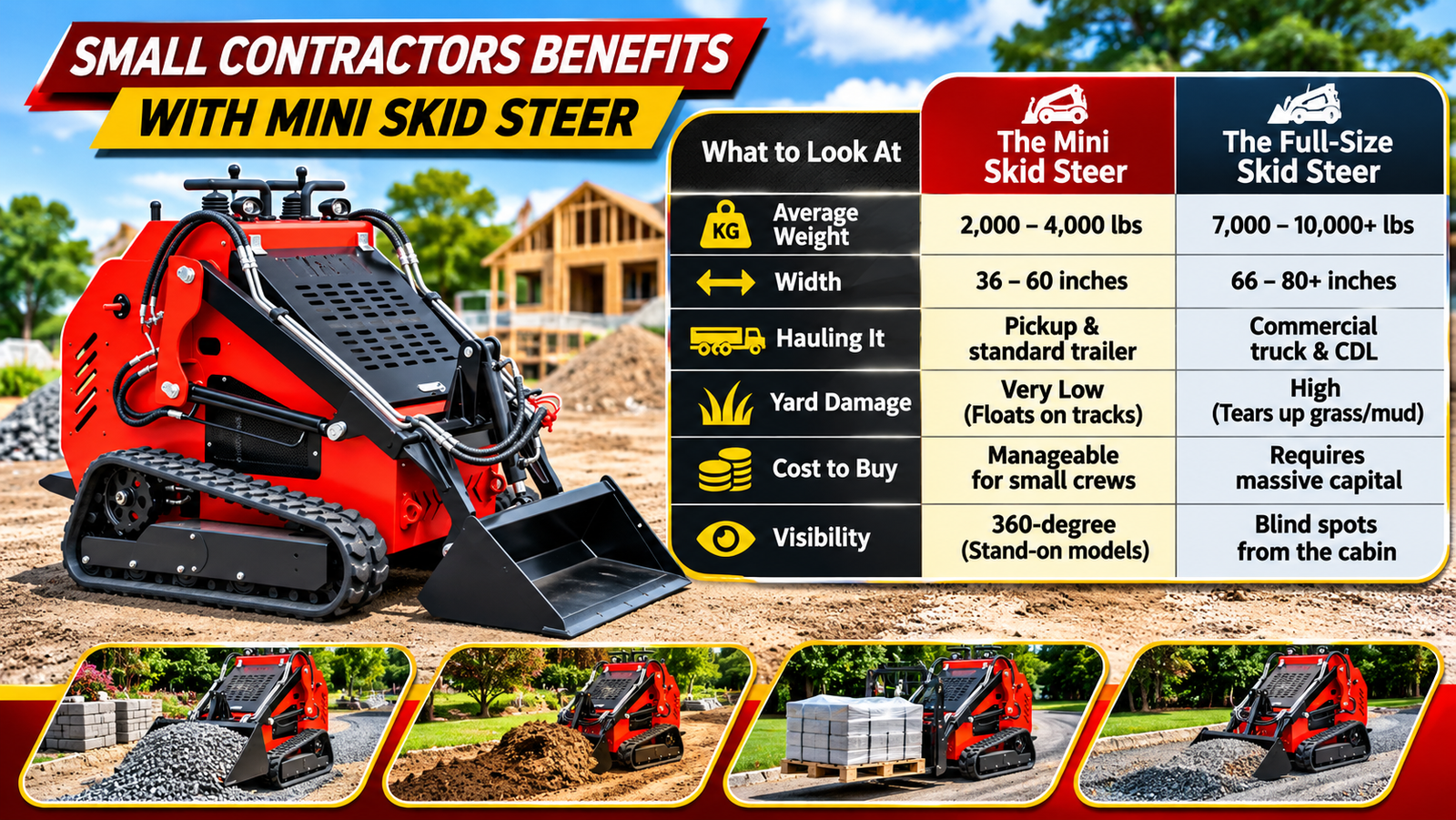
Mini Skid Steer Benefits Comparison
FAQs About Mini Skid Steers
What exactly is a mini skid steer?
It’s basically a miniaturized version of a traditional loader. Often called compact utility loaders, they are designed to do the heavy lifting in tight spaces. Instead of sitting inside a cab, operators usually stand on a platform at the back or walk behind them, allowing you to hop on and off quickly.
What do people actually use them for?
Everything. Because they use so many different attachments, contractors use them to dig trenches, move heavy stone, drill holes for fences, grade soil, and even plow snow in the winter. If you have heavy work in a tight spot, this is the machine you use.
How is it different from a regular skid steer?
Size and access. Full-sized skid steers have massive horsepower and crazy lift capacities, but they are heavy and wide. Mini skid steers trade that raw lifting power for the ability to fit through fence gates and operate without tearing up the ground.
What is the biggest advantage for a small crew?
Versatility and lower overhead. You get to do the work of a five-man crew with one machine. Plus, you save a ton of money on fuel, and you don’t need to hire a specialized commercial driver just to tow the equipment to the job site.
Are mini skid steers hard to maintain?
Not at all. In fact, many of the newer stand-on models are designed for tool-free access to the engine and filters. As long as you keep up with basic stuff—checking hydraulic fluids, greasing the pivot points daily, and keeping the air filters clean—they are incredibly reliable workhorses.
How heavy are mini skid steer machines?
It depends on the model and the tracks, but the sweet spot for a typical mini skid steer is right between 2,000 and 4,000 pounds. The lighter ones are great for basic yard work, while the 4,000-pound diesel beasts can handle serious commercial hardscaping.
How wide are mini skid steers?
Width is their superpower. They usually run between 36 inches and 60 inches wide. The 36-inch models are the absolute favorite for residential contractors because they squeeze perfectly through standard backyard gates.