

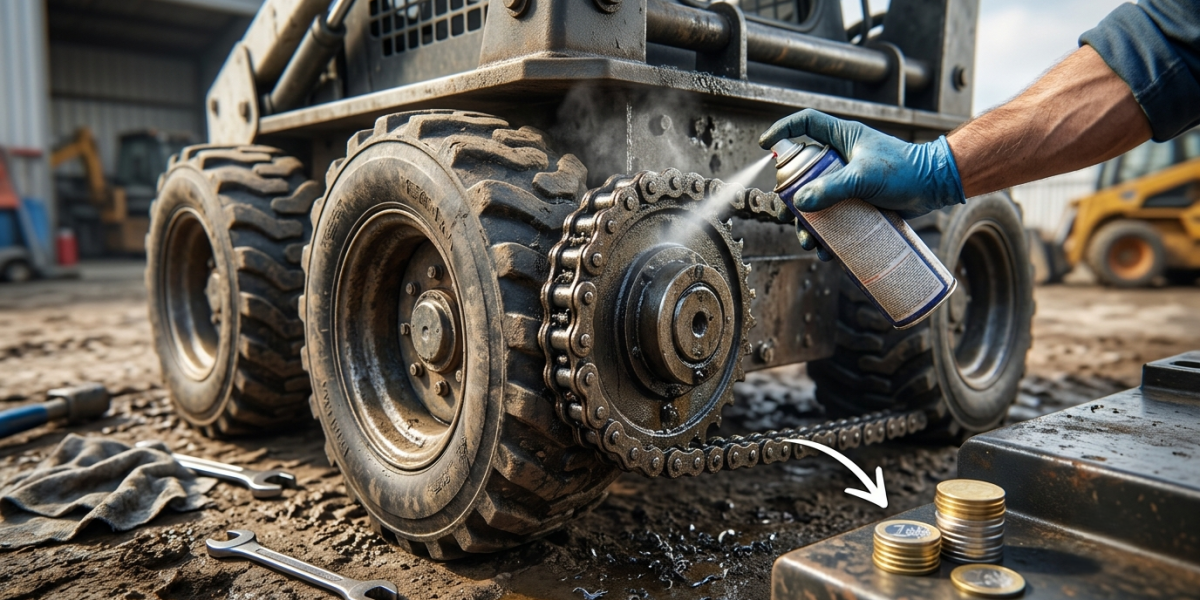
DIY Skid Steer Loader Chain Maintenance: Save $1,000+ Annually
Heavy equipment operators need to have some knowledge on how tiny internal mechanical parts keep the system running, especially when it comes to the compact machinery, such as the TYPHON STOMP mini skid steer loader, where the final drive chain system is the mechanical muscle that converts the high torque of the engine into a strong, ground-gripping mobility with the proper Skid Steer Loader Chain Maintenance.
Ignoring drive chains inside side tanks will lead a major breakdown. Service shops in the heavy equipment industry charge upscale hourly labor fees just to drain the oil, open the heavy inspection covers, and readjust or replace worn-out parts of drive.
By following inspection regularly, proper fluid management, and precise manual tension adjustment, you may never visit expensive dealership service bays. Preventative strategy is a way to keep equipment running smoothly and at the same time get a lot of money back into the business operations.
Importance of Skid Steer Loader Chain Maintenance
Ignoring your drive chains can set off a disastrous mechanical chain reaction throughout your whole drivetrain system. A loose drive chain, besides making noise, will damage the lubricating oil with metal shards continuously produced by chain slapping against the walls of the chain case housing.
Additionally, these metal particles will quickly grind down your drive sprockets, heavy-duty axle bearings, and hydraulic drive motors. What started as a fast, cheap twenty-minute manual adjustment can turn into a very expensive overhaul with the need for replacement parts and days of costly downtime.
Taking complete ownership of your preventative maintenance routine ensures that your compact loader remains ready to tackle demanding jobs such as drilling, digging, trenching, or land leveling.
Components of the Drive Chain System – Skid Steer Loader Chain Maintenance
The drive compartment inside the modern compactor is a heavy-duty machine capable of handling operations, but it is the proper lubrication and tension that will make its life longest.
Chains transfer the energy from hydraulic motors to front and rear axles of the vehicle, which provide the traction necessary to move through heavy piles and rough terrain. Since these chains are sealed within the vehicle chassis to be protected from the environment, it is very common for the operators to forget about them until it is too late.
Therefore, understanding the parts that operate these chains inside the vehicle is the first big step to good maintenance, preventive.
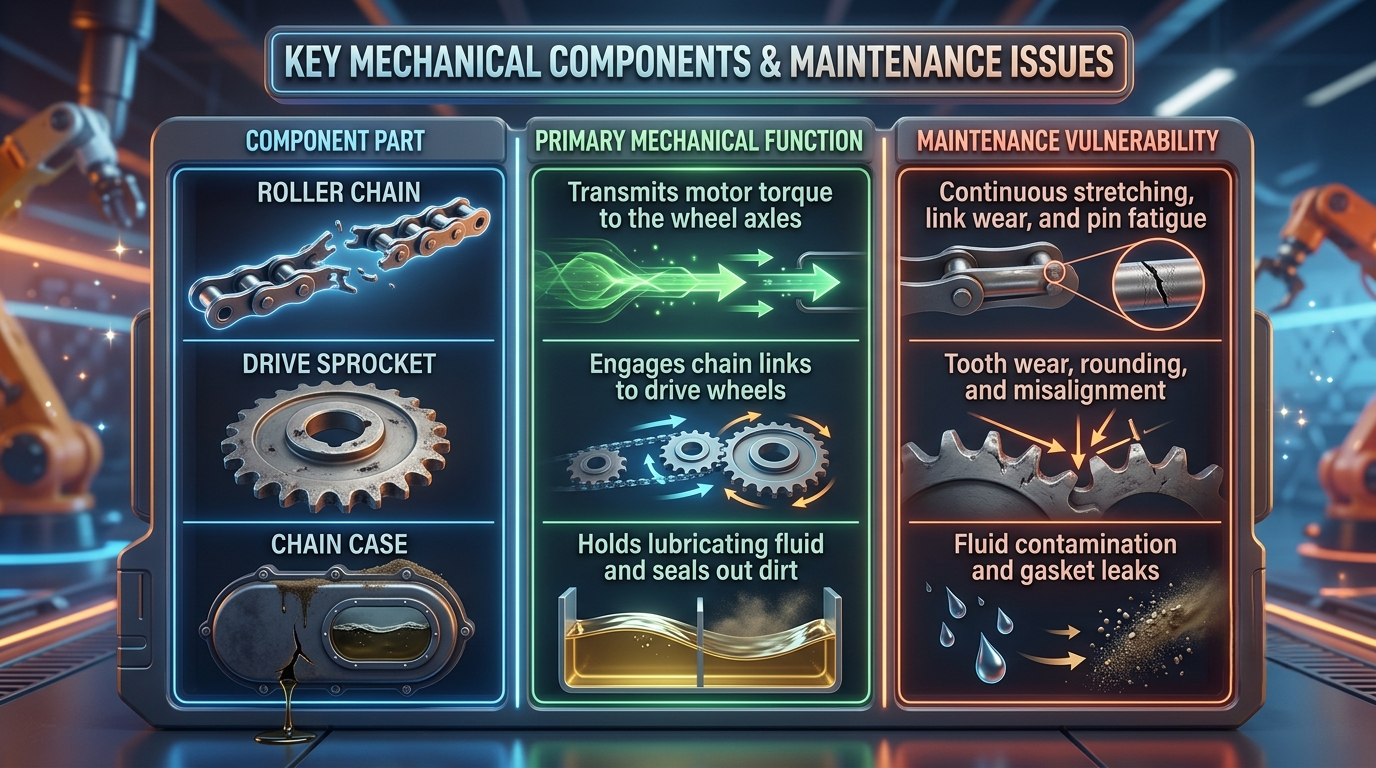
- Primary Roller Chains: These chains are responsible for delivering mechanical force from the main drive motor sprockets all the way to the axles of the front and rear wheels.
- Drive Sprockets: Toothed wheels attached directly to hydraulic motor shafts and wheel axles which interlock with chain links to transmit rotational power.
- Chain Case Housing: The structural steel tanks which are built into the lower frame holding drive chains fully submerged in lubricating fluid.
Table: Skid Steer Loader Chain Maintenance Components
| Component Part | Primary Mechanical Function | Maintenance Vulnerability |
| Roller Chain | Transmits motor torque to the wheel axles | Continuous stretching, link wear, and pin fatigue |
| Drive Sprocket | Engages chain links to drive wheels | Tooth wear, rounding, and misalignment |
| Chain Case | Holds lubricating fluid and seals out dirt | Fluid contamination and gasket leaks |
A Skid Steer Loader Chain Maintenance
Important Safety Steps Before Starting Maintenance
It is essential to follow the safety procedures strictly when working with heavy machinery as a slight mistake may result in even death. Before you start doing any work on the compact machine, such as getting out your tools or loosening the inspection covers, you need to make the area completely safe and secure.
Never only rely on hydraulic jack stands in support of a raised piece of heavy machinery when servicing the drive system. If a hydraulic seal fails when you are underneath the machine, the results can be fatal. Besides, always use heavy-duty jack stands which are rated for your machine’s weight and at the same time block the rest of the wheels firmly.
- Engine Shut Down: Switch off the engine of the ignition system, remove the starter key to prevent accidental startup, and apply the parking brake.
- Relieving Hydraulic Pressure: After releasing the bevel gear, bring the front attachments right down on the ground and then bleed your controls to get rid of the remaining line pressure.
- Securing Weight Support: Using heavy duty jack stands from underneath the verified frame lifting points, lift the loader frame off the floor.
How to Check Chain Tension?
It is very important that the mechanical tension of your drive system be checked so as to deliver the greatest possible power without overworking the system. As time passes, the continual cycles of turning and changing directions cause the pins and rollers to wear, which is termed as chain stretching.
In order to get the tension reading, you have to detach the inspection covers of the lower chassis sides and after that, determine the amount of slack or play in the chain line between the sprockets. An excessive amount of slack causes rough operation, whereas an overtightened chain will overload the bearings and hydraulic motors.
- Remove Access Plates: Before you unbolt the steel inspection cover plates, thoroughly clean the outer chassis so as to prevent dirt from falling inside.
- Measure Free Play: Under maximum downward force deflect the chain at the midspan, and measure movement between supports. This measurement is the free play or slack in the chain.
- Inspect Link Alignments: Visually check the chain links to ensure that they are not twisting and tracking straight along the sprockets.
Instructions for Adjusting Your Skid Steer Drive Chain Tension
When the results of your measurements prove that your drive chain has exceeded the limit, a manual tension adjustment may be necessary. The majority of current loaders have a tensioning device that is either a slide mechanism or manual tension bolts by which the idler sprockets or axles are moved.
This adjustment brings proper tension back to the whole drivetrain. It is to be done on both the sides equally so as to make sure that the machine will be tracking straight during the operation.
Step 1: Loosen Axle Retaining Mounts
The axle mounting bolts located outside the frame will be slightly loosened, which will allow the movement of the axle assembly forward or backward along the slots of adjustment.
Step 2: Turn the Tension Adjuster Bolts
The tension adjustment bolts are turned clockwise in small, equal increments to gradually move the axle outward and take up the slack in the chain.
Step 3: Verify Final Deflection Clearance
Perform the middle chain deflection measurement again to see if it is within the factory specification and tighten the axle mounting bolts.
How to do the Chain Case Fluid Change?
The fluid kept in the chain tanks inside your machine protects your drive systems from friction, heat, and wear. However, as you operate your machine intensively for months, this fluid diminishes the qualities of protection because of moisture, heat, and small metal parts.
The first thing you do when draining the old oil is to flush out the most harmful contaminants, thus, the function of regularly changing the fluid is to keep your components fully lubricated under demand operating conditions.
- Locate the drain plugs by putting a pan under the lower frame holding drain plugs, removing the drain plugs, and letting the old oil drain fully.
- Flush the housing with a clean oil through the upper access port to clear metal shavings from the bottom of the tank.
- Refill to spec level by tightening the drain plug, then fill the reservoir with clean gear oil or recommended fluid until it reaches the check plug level.
What is the Sprocket & Chain Damage?
While you have your inspection covers removed to perform fluid changes or adjustments, it is a good time to evaluate your sprockets and chain links condition. Early detection of minor wear patterns will prevent surprise failures on the way. First, check sprocket teeth for evenness and flatness on the top. In case you see “shark fin” teeth, they are so worn and will soon ruin your new drive chain.
- Hooked Sprocket Teeth: Drive teeth should be checked for signs of rounding or a hooked profile which indicates the sprocket should be replaced.
- Cracked Side Plates: Look at the outside metal link plates carefully for hairline cracks produced by structural fatigue or excessive shock loads.
- Frozen Chain Links: Look for stiff links that do not move easily on the sprocket, this usually indicates rust or lack of lubrication.
Skid Steer Loader Chain Maintenance Tips for Longer Lifespan
Nonstop maintenance of your compact machine will be the secret to living longer of your drive system components. Creating simple working habits can help you reduce the stress loaded on the internal drivetrain parts.
Avoid making sharp and fast pivot turns on rough surfaces such as concrete or asphalt as these fast pivots subject your drive chains to extreme shock loads and accelerate wear across the entire system.
- Smooth Operating Habits: Pick your battles. When you find yourself on a hard surface, avoid doing those counter-rotations aggressively, and at a high speed, if you want to reduce the peak stress loads on the drive links.
- Keep Track of Service Hours: Have a dedicated logging book for your inspection dates, tension adjustments, and fluid changes to keep the schedule.
- Maintenance of Axles Clean: Clean around the outside wheel axles to remove packed mud, wrapped wire and debris after operating in mud or unclean conditions.
Frequently Asked Questions – Skid Steer Loader Chain Maintenance
How often should I check the drive chain tension of my mini skid steer loader?
It is advisable to inspect your drive chain tension every 150 to 200 operating hours, or sooner if you hear popping sounds or notice erratic tracking. Regular checks enable you to detect elongation early and prevent the chain from slapping against the case walls.
What kind of oil do I need to use for refilling my skid steer loader chain case?
A number of manufacturers recommend a top quality 80W-90 weight gear lubricant or heavy-duty engine oil, depending on the specific design of your model. Always refer to your digital manual to check the correct fluid specifications for your climate.
Is it possible to replace a single broken chain link, or should the entire chain be replaced?
Although it is true that an emergency master link may resolve your broken chain problem temporarily at the job site, you will need to replace the whole chain assembly as soon as possible. A worn mechanical chain will cause rapid wear to your sprockets and result in frequent breakdowns.
Why does my skid steer loader lean a little bit to one side when going straight?
This pulling towards the side problem is often a result of uneven chain tension between the left and right side chain cases. If one side is loose, it will delay power transfer to those wheels and cause the machine to drift towards the side where there is more slack.
What are the main symptoms that my internal drive chains are running too loose?
The most typical indicators are loud slapping sound inside the side chassis rails, jerky movement when changing directions, and significant delay in steering response.
How can I tell if my drive sprockets need to be replaced as well as the chains?
Look for the “shark-fin” shape or for the tips of the teeth being sharp and pointed. You will actually get more use out of the chain if you replace the sprockets at this stage of wear, which will prevent the chain from prematurely wearing and slipping under load.
Do I really have to lift all four wheels off the ground in order to adjust the drive chains?
On the contrary, with the entire frame raised from the ground and the tires and drivetrain not offering the ground resistance, you will be able to manually rotate the wheels, measure the real chain deflection, and align the axles.