
Which Skid Steer Bucket Is Best for You: General Purpose vs. Rock Buckets?
It’s not just about getting the job done when you choose the right attachment for your skid steer loader. You also want to make sure that your machine runs as efficiently as possible, that your hydraulic system is safe, and that it will last a long time.
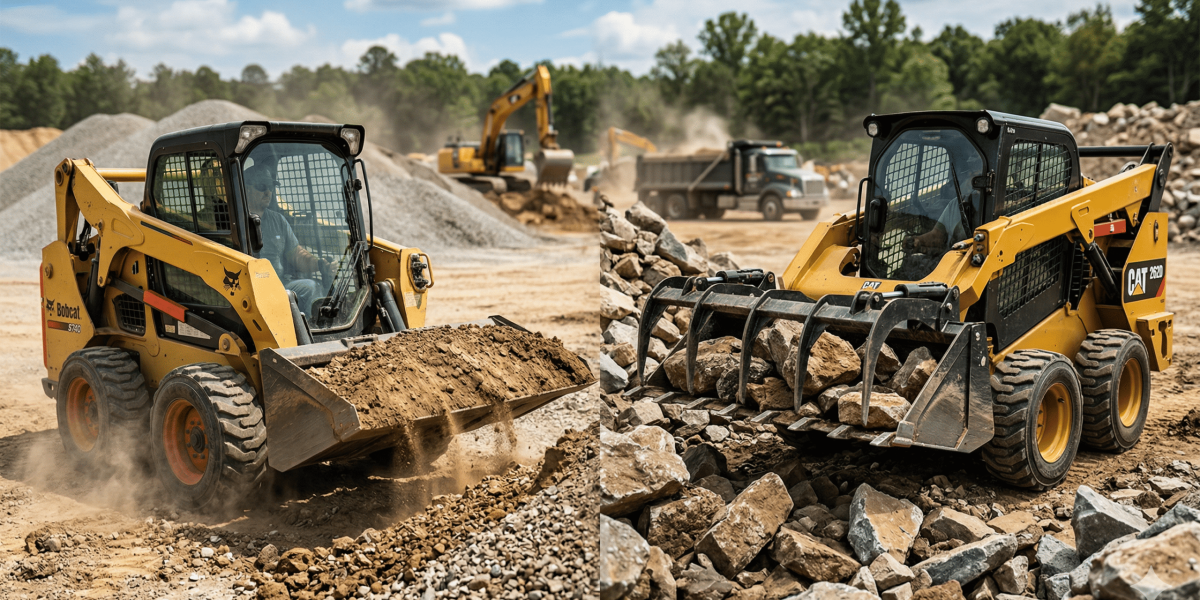
When you’re standing in front of your loader, the most common problem is choosing between General Purpose vs. Rock Buckets. To the untrained eye, they may look alike, but they are made for very different places.
- One is a “jack-of-all-trades” for loose materials, and the other is a “skeleton” made to survive the roughest, most abrasive terrains.
- Knowing the differences between these things is the key to keeping your equipment from wearing out too soon and saving thousands of dollars on repairs.
This detailed guide will help you choose the best skid steer bucket for your project by breaking down the structural designs, best uses, and performance metrics of both types of buckets.
What is a bucket that can be used for many things?
The General Purpose Bucket, which is also known as a dirt bucket or utility bucket, is the most common type of bucket used in the industry. It has a strong bottom and sides that are meant to hold and move loose materials without losing any.
This is probably the first attachment you ever used if you are a landscaper, small-scale farmer, or general contractor. The design is more about “carrying capacity” than “sorting ability.”
- Strong Construction: The walls and floor are made of steel and are continuous, so small things like sand, mulch, or fine dirt won’t leak out while being moved.
- Cutting edges that can be used for many things: It usually comes with a smooth bolt-on edge for grading, but you can also add teeth for light digging in hard soil.
- Best for Volume: Made with a low-profile or long-bottom shape to move the most material in one pass, which speeds up the cycle.
Learn about General Purpose vs. Rock Buckets:
What is a bucket for rocks?
A skeleton-style Rock Bucket is a special attachment that has heavy-duty steel tines instead of a solid floor. These tines are spaced out in a way that lets smaller things like soil or sand pass through while keeping bigger things like rocks, concrete chunks, or trash.
It is the best tool for clearing land and reclaiming land where you need to clean the ground without taking away the valuable topsoil.
- Skeleton Design: The open-slat bottom works like a huge sifter, so you only carry the “problem” materials, like boulders and roots.
- High Breakout Force: Made of thicker, stronger steel that can handle the huge pressure of pulling rocks out of the ground without bending or breaking.
- Debris Management: This is great for cleaning up after a demolition because it lets dust and small gravel fall through while you load big pieces of brick or concrete into a hauler.
Comparative Analysis: Performance and Utility
| Feature | General Purpose Bucket | Rock Bucket (Skeleton) |
| Primary Material | Dirt, Sand, Mulch, Gravel | Rocks, Boulders, Logs, Debris |
| Sifting Ability | None (Solid Floor) | High (Tine Spacing) |
| Visibility | Moderate | High (See through the tines) |
| Durability | Standard Duty | Heavy/Extreme Duty |
| Main Use | Loading and Grading | Clearing and Sorting |
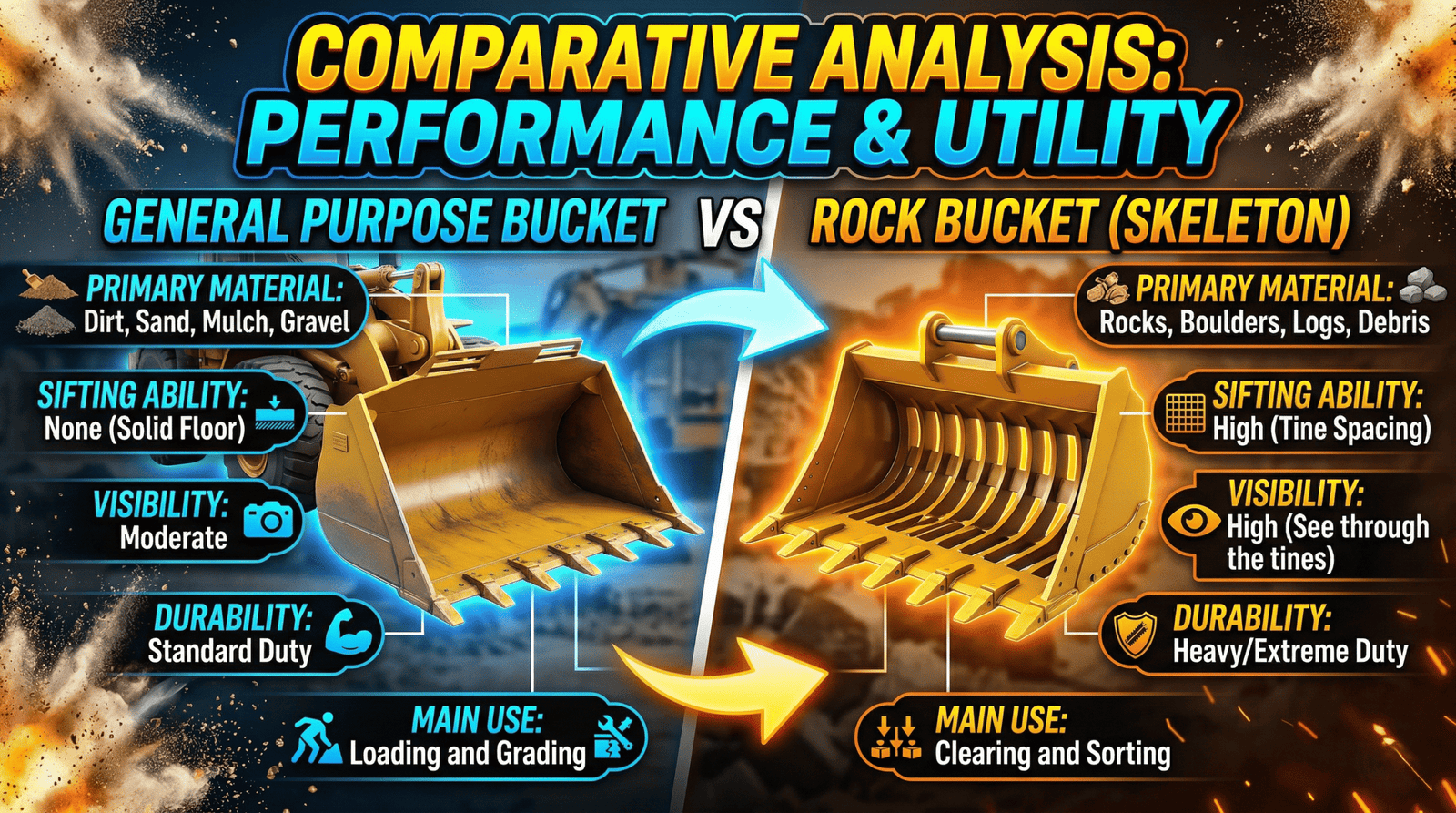
General Purpose vs. Rock Buckets Comparison
When to Use a General Purpose Bucket?
If you move loose materials on a regular basis, you should choose a General Purpose Bucket. This bucket is great for “finish work.” When you drag it back, the solid bottom makes the surface perfectly smooth, which is necessary for getting a lawn or driveway ready.
If you use a rock bucket for fine grading, the tines will leave grooves in the ground, which will make it impossible to get a professional finish.
- Landscaping Projects: Great for spreading topsoil, moving wood chips, or moving decorative mulch around a home.
- For farming: Great for cleaning out barns, moving animal feed, or moving light fertilizers when you need to keep them contained.
- Getting ready for roadwork: Used a lot to move piles of crushed stone or gravel and level it out before it is compacted.
When to Use a Rock Bucket?
The Rock Bucket is the best tool for clearing land and doing “rough-in” work. If there are a lot of buried stones or thick roots on your job site, a general-purpose bucket will probably break or have trouble getting through the ground.
The tines on the rock bucket can “comb” through the ground, pulling up things that are in the way while leaving the dirt behind. This makes the load much lighter, which saves fuel and means fewer trips to the dump pile.
- Site reclamation: This is important for making a wooded or rocky area usable by removing big obstacles while keeping the soil profile.
- Demolition Cleanup: This is a great way to pick up broken pavement or building debris without getting a lot of dirt and dust in your truck.
- Keeping Pastures Clean: Farmers use these to “pick” rocks out of fields before planting to keep their expensive seeding or mowing equipment from getting damaged.
Things to think about for maintenance and longevity
How long your bucket lasts depends a lot on how well it fits the job. If you use a general-purpose bucket in a rocky quarry, the cutting edge will “scallop” and the structure will eventually fail. On the other hand, using a heavy rock bucket for light jobs puts too much stress on the lift arms of your skid steer.
You have to check both of them regularly: look for cracked welds on the tines of the rock bucket and make sure the bolt-on edges of your general-purpose bucket are replaced before they wear down to the base of the bucket.
- Inspections of Welds: For rock buckets, look at the places where the tines meet the frame, since these are the most stressed areas.
- Edge Protection: Always use a bolt-on reversible cutting edge on general-purpose buckets to make the bucket shell last longer.
- Hydraulic Health: Make sure the Rated Operating Capacity (ROC) of your machine can handle the weight of the bucket and the load you plan to put in it. This will keep it from overheating.
FAQs – General Purpose vs. Rock Buckets
Is it possible to move dirt with a rock bucket?
You can move dirt with a rock bucket, but it’s not very effective. Most of the loose dirt will fall through the tines because of the skeleton design. It works better to separate dirt from bigger things than to move it.
Is it better to use a rock bucket or a grapple to clear land?
A rock bucket is better for digging up things that are buried in the ground. A rock grapple, on the other hand, combines the sifting ability of a rock bucket with hydraulic arms that “clamp” onto logs and brush. This makes it more useful for clearing surfaces.
How far apart should the tines be on a skid steer rock bucket?
Most standard rock buckets have tines that are 3 or 4 inches apart. This size is best for keeping most landscaping rocks in place while letting soil and small gravel pass through easily.
How can I tell if my skid steer can handle a heavy-duty rock bucket?
You need to check the Rated Operating Capacity (ROC) of your loader. Rock buckets are a lot heavier than regular buckets. Make sure that the total weight of the rocks and the bucket you want to lift does not exceed the ROC of your machine.
Is it possible to add teeth to a bucket that can be used for anything?
Yes, a lot of general-purpose buckets come with holes already drilled in them so that you can add teeth. Adding teeth to a regular bucket lets it dig into harder ground, but it still won’t be able to sift like a rock bucket.
What makes a rock bucket cost more than a regular bucket? General Purpose vs Rock Bucket
Rock buckets need stronger, reinforced steel and more complicated welding to keep the tines from bending under pressure. The materials used, which are usually steel of Grade 50 or higher, raise the cost of making the product.
What kind of bucket works best for getting rid of snow?
A general-purpose bucket is better for snow because it is strong and can hold the material. A specialized “Snow Bucket” with higher sides and more capacity is the best choice for heavy snow, though.
Final Decision: Which One Should You Get? General Purpose vs. Rock Buckets
The General Purpose Bucket is the best first purchase if you can only afford one attachment and do a lot of different things. It does 80% of the usual skid steer jobs well. If you are clearing land, preparing a construction site, or tearing down a building, though, the Rock Bucket is not a luxury; it is a must-have. It will save you hours of hard work and keep your machine safe from the damage that comes from using a regular dirt bucket to pry heavy things.
To learn more about high-quality skid steer attachments, go to skidsteerloader.net and look at our full line of professional-grade buckets.