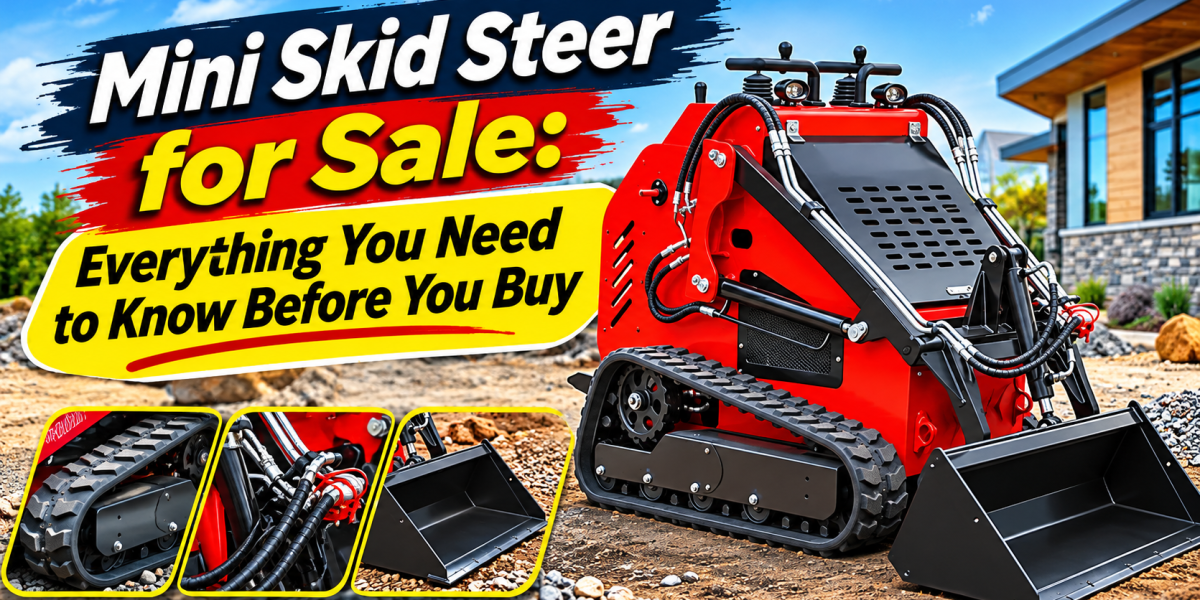
Mini Skid Steer for Sale: Everything You Need to Know Before You Buy
So, you are finally ready to pull the trigger and track down a mini skid steer for sale. Maybe you are absolutely sick of renting machines every other weekend and dealing with pickup logistics, or perhaps your hardscaping crew is completely bottlenecked because they are still moving a mountain of dirt with wheelbarrows. I totally get it.
Taking the leap to buy compact heavy equipment isn’t exactly a casual weekend shopping trip. It is a massive financial commitment that is going to either massively skyrocket your daily job site productivity or turn into a serious, rusting headache sitting on your trailer.
Over at skidsteerloader.net, we see people rush into a purchase based purely on a shiny fresh paint job or a price tag that seems a little too good to be true. But honestly, you have to dig way deeper than the surface level. Before you even think about signing a financing agreement or wiring a chunk of your hard-earned business capital, there is a lot to unpack.
You want to make absolutely sure the machine you bring home actually fits the way you work, the trucks you currently own, and the exact terrain you tackle every single day.
Getting this wrong means dealing with a machine that is either underpowered for lifting your pallets or too heavy for your tow rig. Let’s break down exactly what you should be looking at so you don’t end up with buyer’s remorse.
- Pinpoint your daily grind: Get incredibly specific about the tasks this machine will do 80% of the time, because that dictates every other choice you make.
- Get brutally honest about your budget: Stop looking at just the sticker price; you need to factor in attachments, trailer upgrades, and insurance from day one.
- Measure your logistical limits: Walk out to your driveway or shop right now and double-check your trailer’s payload capacity, because buying a machine you legally cannot tow is a nightmare.
Why Adding a Mini Skid Steer is a Total Game-Changer
If you are on the fence about pulling the trigger on a mini skid steer for sale, let’s talk about why these specific compact machines are totally taking over job sites everywhere. The days of needing massive, earth-shaking machinery for every single dirt job are long gone.
What you are getting here is a crazy blend of brute lifting strength mixed with the agility to squeeze right through a standard 36-inch residential backyard gate. Think about how much time your crew wastes just trying to get material from the street drop-off into a fenced-in backyard.
A full-sized loader simply can’t fit, meaning you are stuck doing it by hand. These compact platforms completely eliminate that bottleneck, paying for themselves incredibly fast just in saved labor hours alone.
But it goes way beyond just fitting through narrow gates. The real magic of these machines is that they are basically high-powered Swiss Army knives. You aren’t just buying a dirt-mover. With the right quick-attach hookups, this one single footprint morphs into your dedicated trencher for irrigation work, your heavy-duty auger for fence posts, and your site cleanup sweeper. You can literally bid on a wider variety of jobs without having to buy five different dedicated machines, which keeps your overhead low and your profit margins wide.
- Stop breaking your back: Replace hours of grueling, physical wheelbarrow labor with a machine that moves a yard of heavy, wet mulch in a fraction of the time.
- Squeeze into the impossible spaces: Zero tail-swing and narrow track widths mean you can comfortably operate right up against house foundations and delicate retaining walls without causing damage.
- Protect the customer’s lawn: These lighter machines spread their operating weight out beautifully, meaning you won’t tear up a client’s pristine, established grass the way a massive standard loader would.
Decoding the Crucial Specs Before You Spend a Dime
Alright, let’s get into the weeds, because looking at the spec sheet for a mini skid steer for sale can feel like you are trying to read a foreign language. But these numbers actually matter in the real world.
The biggest one you need to care about is the Rated Operating Capacity, or ROC. In plain English, this is the absolute maximum amount of weight the manufacturer says the machine can safely pick up and drive around with. If you regularly handle dense, heavy materials like retaining wall block or wet concrete, buying a machine with a weak ROC means the back end is going to tip off the ground every time you lift the arms. That isn’t just frustrating; it is incredibly dangerous on a busy job site.
Then, you have to look at the hydraulic flow, measured in gallons per minute (GPM). Think of the hydraulic system as the beating heart of your machine. If you just want to run a simple dirt bucket or some pallet forks, standard flow is totally fine. But if you have dreams of running power-hungry attachments like a forestry mulcher or a heavy-duty cold planer, you absolutely need a high-flow hydraulic setup. Pushing an attachment harder than your machine’s GPM allows will just stall the tool and overheat your fluids, leaving you dead in the water.
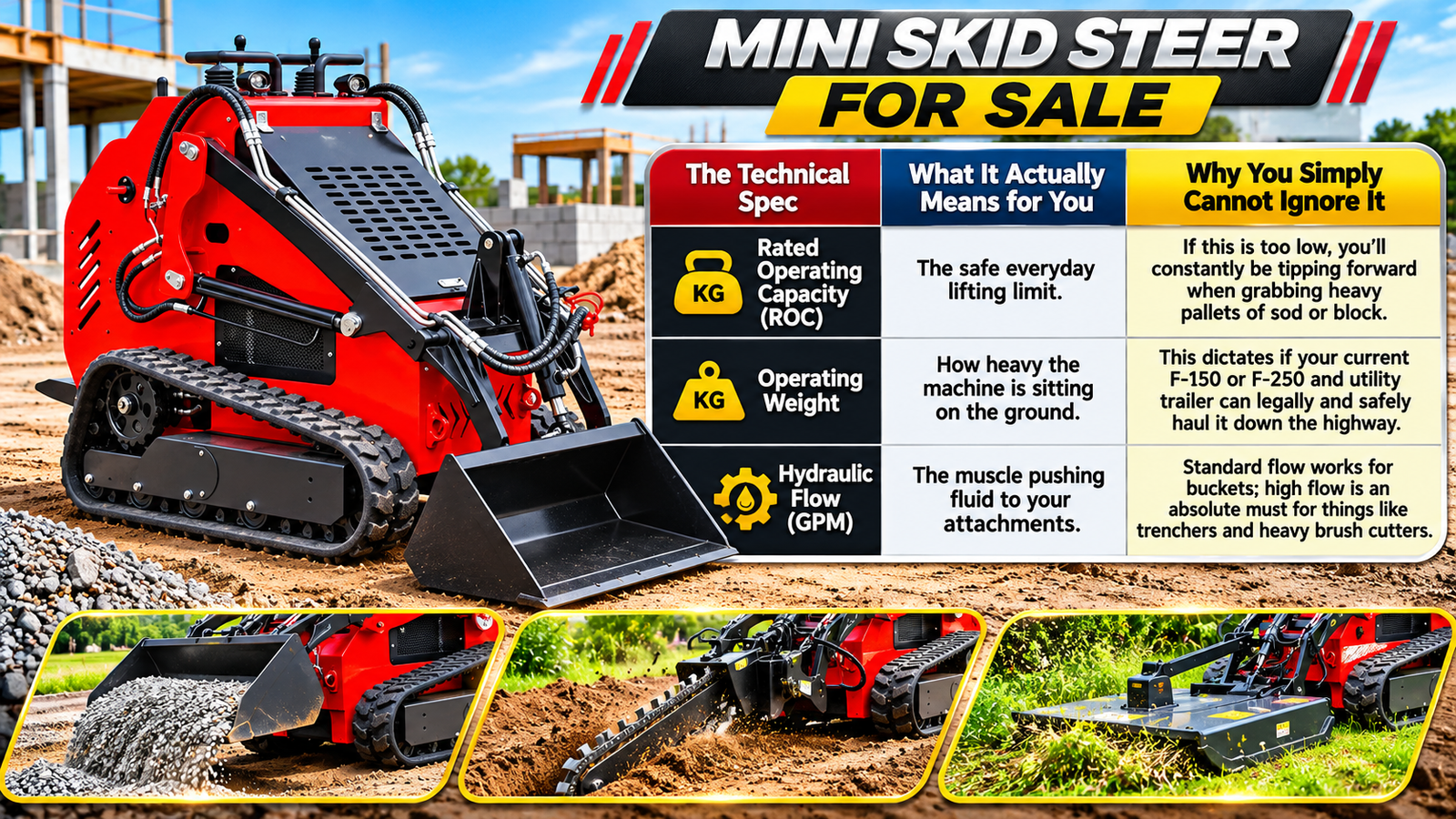
Table: Mini Skid Steer for Sale
| The Technical Spec | What It Actually Means for You | Why You Simply Cannot Ignore It |
| Rated Operating Capacity (ROC) | The safe everyday lifting limit. | If this is too low, you’ll constantly be tipping forward when grabbing heavy pallets of sod or block. |
| Operating Weight | How heavy the machine is sitting on the ground. | This dictates if your current F-150 or F-250 and utility trailer can legally and safely haul it down the highway. |
| Hydraulic Flow (GPM) | The muscle pushing fluid to your attachments. | Standard flow works for buckets; high flow is an absolute must for things like trenchers and heavy brush cutters. |
- Check the real tipping load: The ROC is usually calculated as about a third to a half of the actual tipping load. Make sure you have a comfortable buffer for those unpredictable loads.
- Measure your dump height: There is nothing worse than buying a loader only to find out the hinge pin doesn’t reach high enough to dump dirt over the side of your specific dump trailer.
- Inspect the hookups: Verify exactly what kind of hydraulic quick-disconnects the machine has, so you know if you need expensive adapters for the attachments you want to rent.
Mini Skid Steer For Sale Guide
The Big Debate: Should You Get Wheels or Tracks?
You are going to hit this fork in the road almost immediately when hunting for a mini skid steer for sale: do you want tires, or do you want rubber tracks? Honestly, this isn’t about what looks cooler; it’s entirely about what kind of ground you drive on the most. Let’s talk about wheels first.
Wheeled machines are snappy, fast, and generally a lot cheaper to buy. If your bread and butter is driving on hard-packed dirt, sweeping concrete parking lots, or doing asphalt prep work, tires are fantastic. Plus, when a tire goes bald, replacing it doesn’t completely drain your bank account. The maintenance is fairly straightforward.
But if you are a landscaper, a farmer, or you do site prep in areas where the weather is unpredictable, you probably want to look exclusively at a compact track loader. Tracks take the weight of the machine and spread it out over a much longer, wider surface area. This means you literally float over thick mud, deep loose sand, and soggy grass that would instantly swallow a wheeled machine down to the axles.
Yes, the initial price is higher, and yes, replacing a snapped rubber track and worn-out undercarriage bogies will hurt your wallet. However, tracks let you get to work on a rainy Tuesday when the guy with the wheeled machine has to pack up and go home.
Table: Operating features of Wheeled Vs Tracked Mini Skid Steer for Sale
| Operating Feature | Wheeled Mini Skid Steers | Tracked Mini Skid Steers |
| Your Best Job Sites | Urban hardscaping, concrete work, asphalt, highly compacted soils. | Wet landscaping, muddy construction sites, sandy areas, uneven hillsides. |
| The Ride & Handling | Faster top travel speed, but can bounce you around on rough terrain. | Slower overall speed, but incredibly planted, stable, and smooth over ruts. |
| The Financial Reality | Lower entry price; tires are relatively cheap and easy to swap out. | Noticeably pricier upfront; replacing heavy tracks and rollers requires a solid budget. |
- Look at your local weather: If you live in an area where it rains constantly, tracks are basically mandatory if you want to keep your schedule moving.
- Think about turf damage: Wheels can easily spin and leave nasty ruts in a client’s grass, while tracks are much gentler when making wide, sweeping turns.
- Plan your maintenance fund: Do not buy a tracked machine if you aren’t prepared to eventually drop a couple of thousand dollars on undercarriage maintenance down the road.
Brand New vs. Used Machines: Where Should Your Money Go?
This is usually the most stressful part of looking at a mini skid steer for sale. Do you take on a bigger monthly payment for a shiny brand-new rig, or do you hunt the used market for a bargain? Let’s be real.
Buying new is incredible if you have the cash flow. You get a machine with zero hours on the diesel engine, no sketchy patch jobs on the hydraulic lines, and most importantly, a rock-solid factory warranty. If the computer glitches out in month three, you just call the dealer and they handle it. It is pure peace of mind, and it costs anywhere from $20,000 to $55,000 to get it.
On the flip side, the used equipment market can save you a massive pile of cash. We are talking 40% to 60% less than the showroom price. If you run a part-time gig or you just need the machine for occasional property maintenance, eating the depreciation of a new machine is tough to justify.
But buying used means you have to be a detective. You can’t just kick the tires. You have to crawl under it, check for fluid weeping around the cylinders, look for hairline cracks in the lifting arms, and demand to see the service history. A cheap used machine that instantly blows a drive motor will end up costing you more than a brand-new one.
- Demand the paperwork: If a private seller can’t prove they changed the hydraulic fluid and engine oil on schedule, you should probably walk away.
- Understand the warranty gap: Factor in the reality that a used machine means you are acting as your own warranty department when things eventually break.
- Play the depreciation game: A used machine has already taken its biggest hit in value, meaning you can often use it for a year and sell it for almost exactly what you paid.
The Attachments That Actually Make You Money
Here is a hard truth: the machine itself doesn’t actually do the work. The mini skid steer for sale that you just bought is really just an expensive, motorized hydraulic pump on tracks. The attachments are what actually make you profitable.
One of the biggest rookie mistakes is blowing your entire equipment budget on the loader and having nothing left over for the tools. You need to map out your attachment strategy on day one.
Obviously, a solid tooth bucket or a smooth grading bucket is step one. You need that for the heavy lifting. But do not sleep on pallet forks. Being able to unload your own materials from a delivery flatbed without waiting on their forklift driver saves an insane amount of time.
From there, look at the niche tools that fit your trade. Landscape guys make a killing with soil conditioners and power rakes for prepping seedbeds. Trenching attachments turn a multi-day hand-digging nightmare into a fun two-hour afternoon project. Buy the attachments that solve your biggest daily headaches.
- Start with the absolute basics: Get a high-quality bucket and heavy-duty pallet forks first; they will easily get used on 90% of your jobs.
- Rent before you buy the weird stuff: Before dropping $5,000 on a specialized stump grinder, go rent one for the weekend to see if you actually use it enough to justify owning it.
- Check the quick-attach system: Make absolutely sure the machine you buy uses the universal mini skid steer mounting plate, or you will be locked into buying expensive proprietary tools.
The Hidden Costs of Ownership You Need to Know
Finding a killer deal on a mini skid steer for sale is great, but the financial planning does not stop the day you bring it home. You have to face the Total Cost of Ownership (TCO). These machines live a brutal life. They operate in dust, mud, extreme heat, and freezing cold.
If you treat it like a cheap lawnmower and ignore the maintenance, it will financially ruin you. The experts always point out that you can easily get 5,000 solid hours out of a machine, but that only happens if you are obsessive about the upkeep.
You need to build a daily routine. Every single morning, before you turn the key, you have to check the engine oil, tap the air filters if you are working in dust, and most importantly, pump grease into every single pivot pin on the loader arms.
Skipping the grease means metal grinds on metal, which leads to sloppy loader arms and insanely expensive bushing replacements. Plus, you need to calculate your hourly running cost—including diesel, insurance, and wear items—so you know exactly what to charge your clients to stay in the green.
- Grease is cheap, steel is expensive: Buy a battery-powered grease gun and make it a religious daily habit to hit every zerk fitting on the machine.
- Keep things clean: Let your engine breathe; blow out the radiator fins and the engine bay with an air compressor weekly to stop it from dangerously overheating.
- Factor in the fuel: Don’t forget to track how much diesel you are burning per job, and bake that cost directly into your client estimates so you aren’t eating the expense.
FAQs About Buying and Owning a Mini Skid Steer for Sale
How much is this actually going to cost me upfront?
If you want that brand-new machine smell and a factory warranty, expect to write a check anywhere from $20,000 to $55,000 depending on the horsepower and features. If you are willing to hunt for a used model, you can routinely slash those numbers down by 40% to 60%, leaving you more cash for attachments.
How many hours will one of these machines actually last?
If you are religious about your fluid changes, greasing, and not aggressively abusing the machine, hitting that 5,000-hour mark is very typical. Machines that are totally neglected barely make it half that long before needing a major, expensive engine or hydro-pump rebuild.
Why do people choose tracks over wheels so often?
It all comes down to weather and mud. Wheeled machines are great and cheap for pavement, but tracks give you insane traction and floatation. Tracks let you keep working in soft dirt or rainy conditions without sinking up to your knees, which keeps your projects perfectly on schedule.
Can I just drive this thing without a special license?
For residential work and standard private property jobs, you generally do not need any kind of commercial driver’s license (CDL) just to sit on the machine and pull the levers. However, if you are stepping onto a heavily regulated commercial construction site, expect to show specific safety training or OSHA certifications.
How much weight can I really pick up with one of these?
It varies wildly by the specific model you choose. The little entry-level guys might max out safely around 500 pounds. But the beefy, top-tier mini machines can comfortably pick up 1,000 to 1,500 pounds without breaking a sweat. Always trust the ROC numbers, not your gut.
Are these things actually any good at digging dirt?
Absolutely. If you slap a tooth bucket on the front, these machines are incredibly aggressive diggers. They have plenty of breakout force to dig small foundations, grade out rough soil, or scrape away old compacted gravel driveways.
How hard is it to move this around town?
This is their biggest selling point. Unlike a massive backhoe, you can easily load most of these mini machines onto a standard, heavy-duty tandem axle utility trailer and safely tow it from neighborhood to neighborhood with a modern 3/4-ton pickup truck.
Mini Skid Steer for Sale