How to Use a Skid Steer Grapple Bucket to Make Work More Efficient
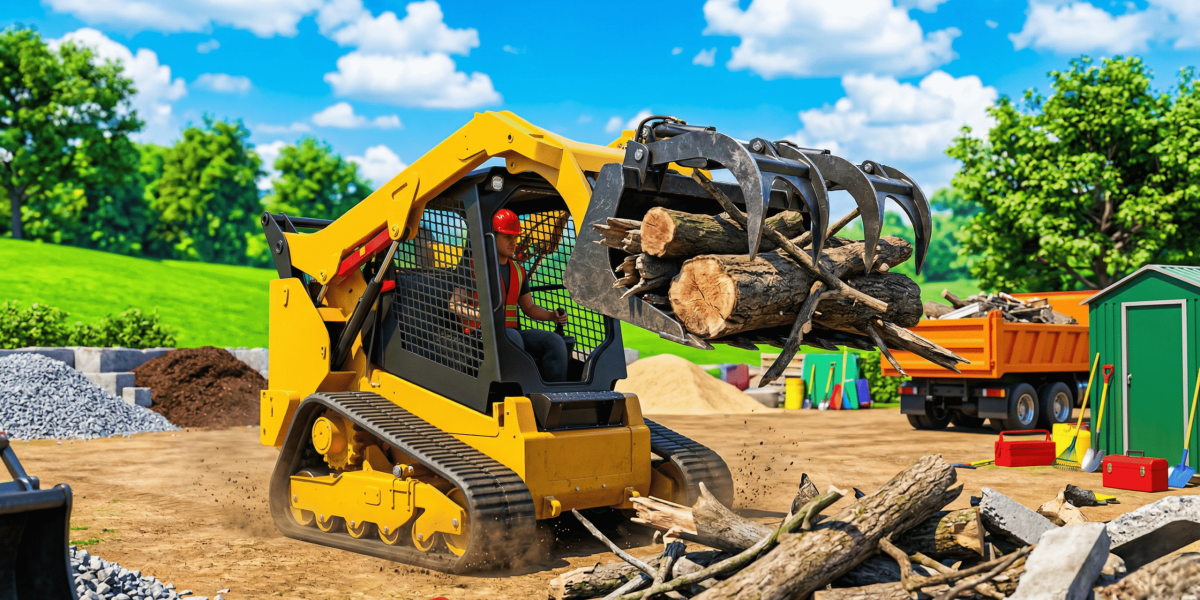
Without a doubt, a Skid Steer Grapple Bucket is one of the most useful and game-changing attachments you can add to your heavy machinery collection. A grapple bucket is different from a regular bucket because it has hydraulically powered upper arms or jaws that clamp down tightly on loads that are uneven, heavy, or hard to handle.
This clamping action lets workers move materials that would normally spill out of the sides of a regular bucket, which changes the way a job site works. The ability to grab, lift, and move a wide range of objects with precision greatly reduces the need for manual labor, whether you are cleaning up after a storm, tearing down a building, or dealing with agricultural waste.
A Skid Steer Grapple Bucket Can Change How You Work
You can easily turn a hauling job that requires multiple people and days into a job that only one person can do by using this powerful tool every day. The dual hydraulic cylinders give the Skid Steer Grapple Bucket a lot of grip, so heavy materials stay stable even when going over rough or uneven ground. This makes it an essential tool for getting the most work done on the job site.
- Better Material Retention: The hydraulic clamping arms keep uneven loads in place, stopping spills that could be dangerous and take a long time to clean up.
- Big Labor Savings: This attachment cuts down on the need for manual sorting and heavy lifting by handling large amounts of debris in one pass.
- Flexible Task Management: Operators can quickly switch from scooping up loose dirt to picking up big logs or sorting scrap metal without having to change attachments.
Finding the Most Useful Apps for the Jobsite
To get the most out of your Skid Steer Grapple Bucket, you need to know about the many industries and uses where this attachment really shines. These buckets are great for tearing down buildings, sorting through broken concrete, picking up twisted rebar, and safely getting rid of dangerous debris in the construction and demolition industries.
Grapple attachments are very useful for landscapers and forestry workers because they help them clear out thick brush, move huge tree stumps, and move logs or boulders that are too big or oddly shaped to fit in a smooth-edged bucket. In addition, these attachments make it easy to move hay bales, clean up farm waste, and fix storm damage in pastures on farms.
The bucket’s strong design lets it dig into the ground to break up tough roots and rocks, and the top clamps give it the grip it needs to pull them free. By giving your machines a high-quality Skid Steer Grapple Bucket, you are giving your team a versatile workhorse that can handle even the toughest jobs with ease and speed.
- Construction and Demolition Clearance: Easily pick up and move heavy, sharp things like concrete chunks, scrap metal, and building debris.
- Landscaping and Forestry Management: It’s easy to clamp down on natural materials that are hard to work with, like huge tree stumps, thick brush, and heavy logs.
- Farm and Agricultural Maintenance: Move big bales of hay, clear debris from pastures, and handle organic waste in a way that makes daily farm work easier.
Getting the Most Out of TYPHON STOMP Loaders
The key to true operational excellence is to pair the right attachment with a reliable machine. The TYPHON STOMP mini skid steer loader is a great host for your Skid Steer Grapple Bucket.
Skidsteerloader.net is a reliable source for heavy machinery. They sell machines that are designed to be both agile on small jobs and tough enough to handle heavy loads. The TYPHON STOMP has a very powerful 23hp engine that runs smoothly and provides the hydraulic flow needed to easily power two grapple cylinders.
This machine can lift more than 830 pounds, which is impressive given its small size. It’s great for getting around tight garden spaces, orchards, and crowded public parks. When you attach a Skid Steer Grapple Bucket to the TYPHON STOMP, you get the most torque and precise control, which makes digging, drilling, and grabbing go smoothly.
The hydraulic four-wheel drive or track system is easy to use and keeps the machine stable and planted. This gives it the perfect counterweight and traction when the grapple bucket is full of heavy debris.
- Small but incredibly powerful: The mini loader’s design lets operators move around in tight spaces while still having the hydraulic power they need to lift heavy things.
- High-Performance Engine Specifications: Strong engines that give the steady torque and hydraulic flow needed to run heavy-duty attachments.
- Great Maneuverability and Control: The controls and track/wheel systems are easy to use and make sure that the vehicle stays stable when carrying uneven loads over rough ground.
Differences and Similarities between Grapple Buckets
The term “Skid Steer Grapple Bucket” is often used to mean a lot of different things, but there are actually several different types of this attachment, each designed to make certain tasks on the job site easier.
Solid bottom grapple buckets and skeleton (or root) grapples are the two most common types. A solid bottom grapple bucket is basically a regular heavy-duty bucket with hydraulic clamping arms. This makes it the best choice for holding onto smaller, loose materials like gravel, dirt, and fine demolition debris while also holding onto bigger things.
A skeleton grapple, on the other hand, has an open, slatted bottom that is made to let dirt, sand, and fine gravel pass through while keeping the bigger rocks, roots, and logs. Landscapers and land-clearing workers really like this sifting feature because it gets rid of trash while leaving the good topsoil behind.
It is very important to choose the right design, width, and steel yield strength. The attachment must be a little wider than the tracks on your machine so that you don’t drive over ground that hasn’t been cut, and the steel must be strong enough to handle heavy daily use.
- Solid Bottom Grapple Buckets: Great for demolition and recycling because they keep small, loose debris from falling through the bottom of the bucket.
- Skeleton and Root Grapples: These are great for clearing land and farming because the slatted design lets valuable topsoil sift through while catching big rocks.
- Best Size Strategy: Always choose a grapple attachment that is the same width as or slightly wider than the wheelbase of your skid steer. This will protect the tires or tracks of the machine.
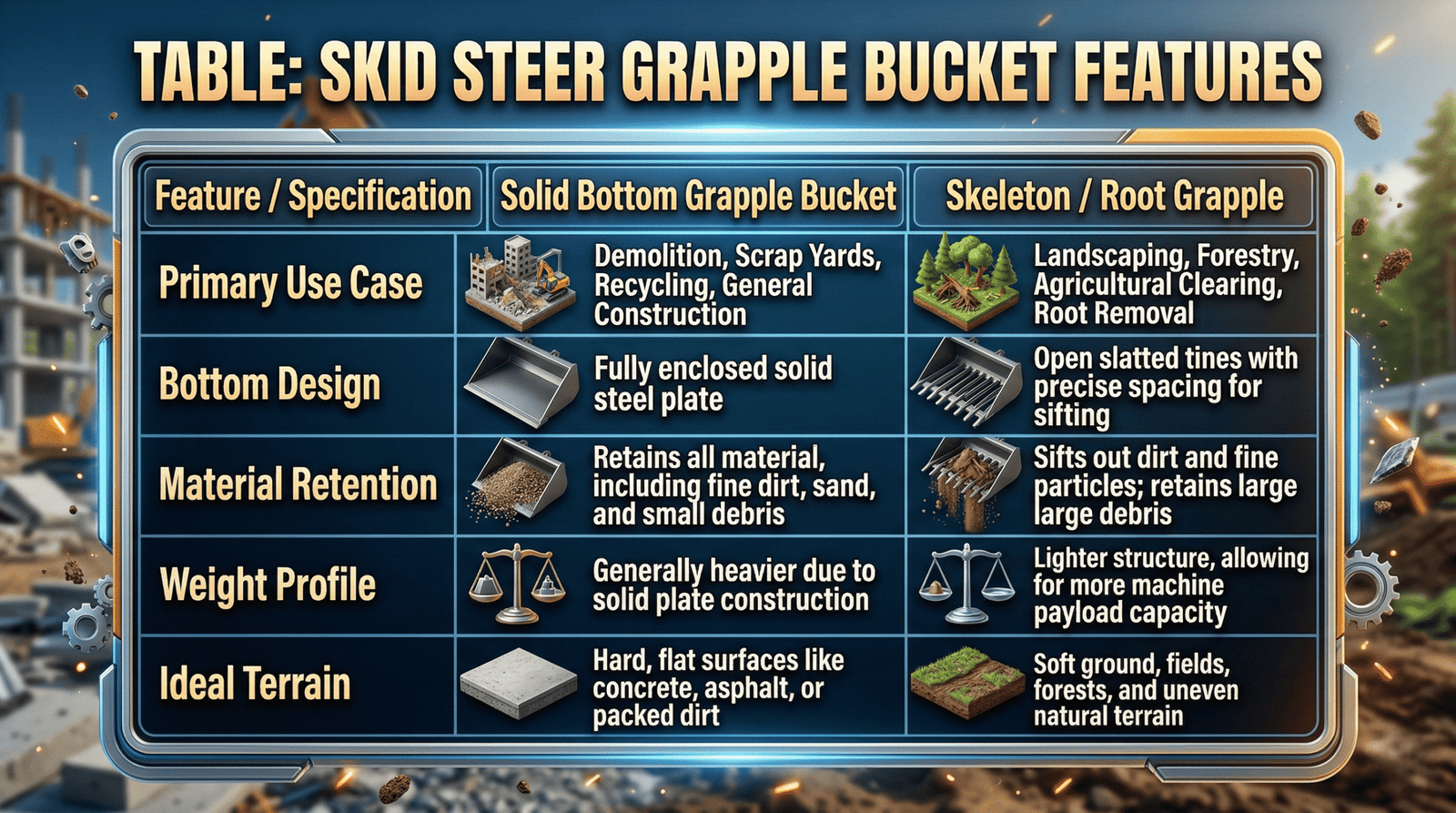
Table: Skid Steer Grapple Bucket Features
| Feature / Specification | Solid Bottom Grapple Bucket | Skeleton / Root Grapple |
| Primary Use Case | Demolition, Scrap Yards, Recycling, General Construction | Landscaping, Forestry, Agricultural Clearing, Root Removal |
| Bottom Design | Fully enclosed solid steel plate | Open slatted tines with precise spacing for sifting |
| Material Retention | Retains all material, including fine dirt, sand, and small debris | Sifts out dirt and fine particles; retains large debris |
| Weight Profile | Generally heavier due to solid plate construction | Lighter structure, allowing for more machine payload capacity |
| Ideal Terrain | Hard, flat surfaces like concrete, asphalt, or packed dirt | Soft ground, fields, forests, and uneven natural terrain |
Skid Steer Grapple Bucket Features
Essential Care for Long-Lasting Attachment Strength
A Skid Steer Grapple Bucket is under a lot of structural stress and is exposed to rough materials every day, so you need to follow a strict and consistent maintenance schedule to protect your investment.
The most important part of taking care of a grapple is making sure it is well-lubricated. These attachments have many pivot points and hinge pins that make it easy to open and close the heavy hydraulic jaws. If you don’t take care of these greaseable pins, the metal-on-metal friction will quickly wear them down, causing them to squeak, slow down, and eventually break.
Also, the hydraulic cylinders and hoses are the most important parts of the attachment and need to be checked very carefully before each shift. Operators need to look for any signs of hydraulic fluid leaks, frayed hose jackets, or pinched lines. They also need to make sure that the hoses are routed correctly so that the loader’s lift arms don’t crush them.
Also, always check the cutting edges, structural welds, and cylinder guards for any stress fractures or bending. Fixing these small problems right away will stop big problems that could stop work on the job site completely.
- Daily lubrication that is strict: Before every shift, put high-quality grease on all pivot points, bushings, and hinge pins to stop metal-on-metal friction that could damage the machine.
- Inspections of the hydraulic system: Check all hydraulic hoses, flat-face couplers, and twin cylinders for leaks, cuts, or drops in pressure to keep the clamping force strong.
- Checks for Structural Integrity: Check the steel tines, weld seams, and built-in cylinder guards regularly for any stress fractures, bending, or wear and tear after heavy use.
FAQs About Grapple Attachments
What does a grapple bucket for a skid steer do?
A Skid Steer Grapple Bucket has the same scooping power as a regular bucket, but it also has jaws that clamp down over the top and are powered by hydraulics. This lets the operator safely lift, move, and secure large, heavy, or loose items like logs, brush, rocks, and demolition debris without worrying about them spilling out while they’re being moved.
How do I know what size grapple to get for my skid steer?
The width of your grapple attachment should be the same as or a little wider than the track width or wheelbase of your skid steer loader. This size makes sure that the bucket clears a path for the machine’s tires or tracks so they don’t run over sharp debris or uncut ground. It also makes sure that the attachment’s weight doesn’t go over the loader’s rated operating capacity.
Can you use a grapple bucket to dig?
You can dig with a grapple bucket, but how well it works depends on how it is made. A solid bottom Skid Steer Grapple Bucket with a reinforced cutting edge is great for digging into hard-packed soil. Skeleton grapples, on the other hand, are better for digging just below the surface to get rid of tough tree roots, rocks, and thick brush.
How do the hydraulic grapple arms work?
The skid steer’s extra hydraulic system powers the grapple arms. The machine pumps hydraulic fluid into the two cylinders on the attachment. These cylinders forcefully open or close the top jaws. Using a thumb roller or toggle switch on the joystick, operators can easily control this clamping action from inside the cab.
What makes a grapple bucket different from a root grapple?
The main difference is how the floor of the bucket is made. A standard grapple bucket has a solid steel bottom that catches everything, even fine dirt and sand, so it’s great for scrap and demolition. A root (or skeleton) grapple has an open, slatted bottom that lets small dirt and gravel fall through while keeping only the bigger roots, logs, and rocks.
How often do I need to clean and grease my grapple attachment?
You should do maintenance every day or before every big use. Daily greasing of all pivot pins and bushings is highly recommended to keep the jaws moving smoothly. Operators should also look at the hydraulic hoses to see if they are worn, check the cylinder guards for damage, and make sure all the flat-faced couplers are clean before connecting them to the loader.
Are grapple buckets safe to use when lifting loads that aren’t even?
Yes, they are very safe for this purpose. Most high-quality grapple buckets have two separate hydraulic cylinders that control the left and right jaws. Because the jaws can move independently, they can fit around an uneven load. This means that one side can clamp down tightly on a thin branch while the other side holds a thick stump at the same time.
Raising Your Business with Better Heavy Equipment: Skid Steer Grapple Bucket
One of the best ways to quickly increase productivity on the job site, cut down on manual labor costs, and offer more services is to buy a high-quality Skid Steer Grapple Bucket. This attachment lets operators work faster, safer, and with much more accuracy than ever before by securely holding down the most difficult materials. When you buy heavy machinery and attachments from the best companies in the business, you can be sure that they will last in the toughest commercial settings. The right grapple attachment will make your whole operation much easier, whether you’re using the very versatile TYPHON STOMP mini loader for landscaping at home or a large-frame machine for demolition at work. Take the time to make sure that the attachment’s specifications match your machine’s capabilities, stick to your daily maintenance schedule, and watch as your daily output reaches new heights.
- Immediate Return on Investment: The attachment’s initial cost is quickly made up for by the huge drop in manual labor and the faster handling of materials.
- More Service Options: Adding a grapple to your machine lets your business confidently bid on more complicated jobs, like clearing land and cleaning up after a bad storm.
- Unmatched Equipment Durability: If you buy high-quality attachments from trusted suppliers, your machinery will last for years of heavy use without breaking down.