
2026 Skid Steer Loader Fluid Guide: Hydraulic Oil, Grease & Filter Changes
You can no longer keep your skid steer loader in 2026 by just checking the oil level occasionally. You need to know about high-quality performance of the skid steer loader fluids and have a well-scheduled maintenance plan for this.
As these machines get more technology-rich, the connection between engine health and hydraulic performance has become a lot more important. This guide will be a great help to operators who want to increase machine availability while also preserving their asset through proper fluid management.
The Critical Role of Hydraulic Oil in Modern Loaders
Skid steers are hydraulic-driven and the hydraulic system supports the system performing all basic movements as well as high-flow demands for complicated attachments. Industry-wise, 2026 will see an increasing trend towards environmentally targeted viscosities so that the old “one-size-fits-all” solution can be done away with for maximum power transmission and component protection.
- Viscosity Selection: The choice of one between ISO 32 and ISO 46 is very significant. ISO 32 is the best option for cold regions because of its lower viscosity and better flow, whereas ISO 46 is thicker and hence provides the required support during heavy-duty summer operations.
- System Protection: The uses of a top-grade hydraulic oil being anti-wear additives that cover the internal working components, thus preventing the metal-on-metal contact that promotes premature pump failure.
- Contamination Control: According to correct fluid use, holds contaminants suspended until the filter traps them, ensuring that the delicate valves and hydrostatic drive cylinders remain free of debris.
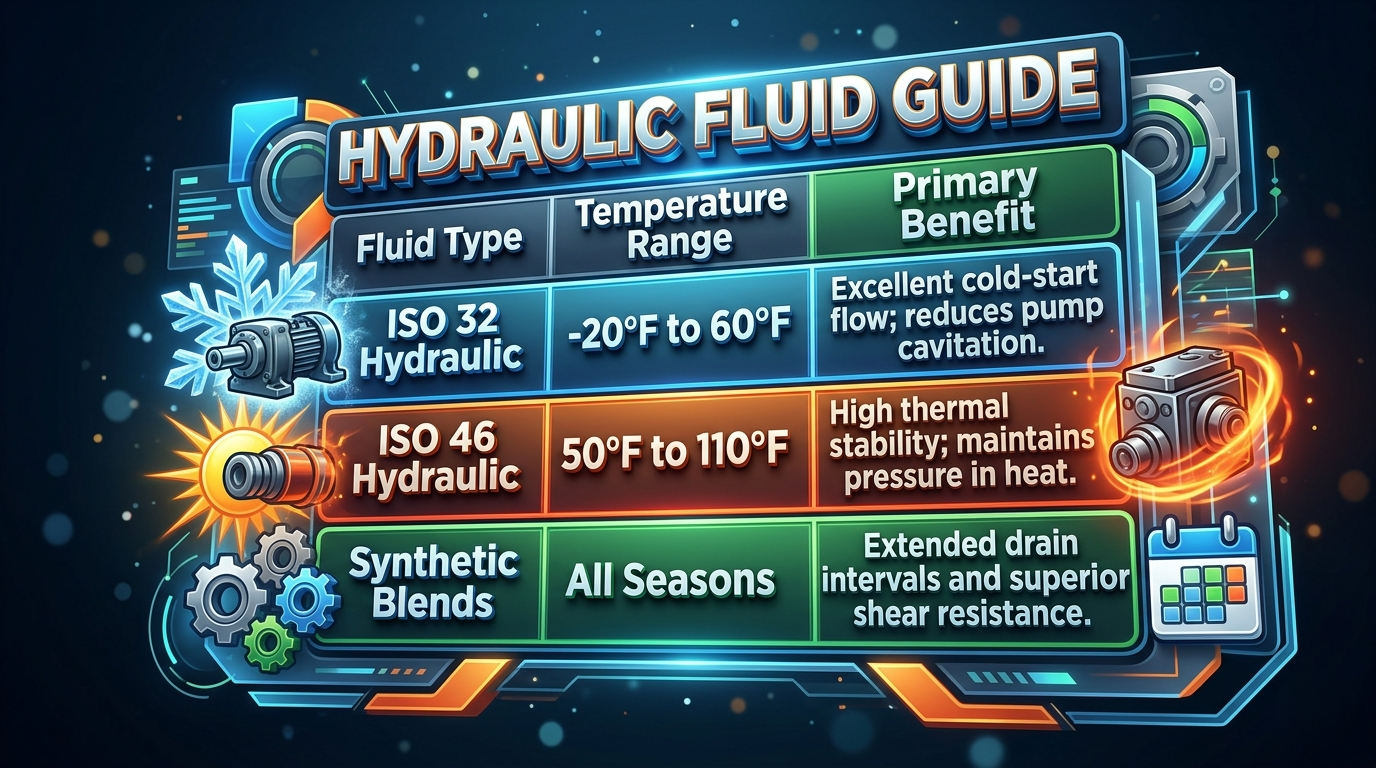
Table: Skid Steer Loader Fluid Types
| Fluid Type | Temperature Range | Primary Benefit |
| ISO 32 Hydraulic | -20°F to 60°F | Excellent cold-start flow; reduces pump cavitation. |
| ISO 46 Hydraulic | 50°F to 110°F | High thermal stability; maintains pressure in heat. |
| Synthetic Blends | All Seasons | Extended drain intervals and superior shear resistance. |
Skid Steer Loader Fluid Guide
Precision Greasing: The Secret to Machine Longevity
Your machine’s greasing requirements are quite essential and in fact, it is the most effective method in preventing structural repairs which can be quite expensive. By 2026, loader machines will be very high-torque and in such a situation, the operator cannot compromise on the lubrication of each and every bushing and pivot pin in the machine in order to have a professional performance.
- Intervals Daily: The greasing of the lift arms pivoting pins and the Bob-Tach or the quick-attach system should be done after every 8 to 10 hours to throw out the dirt and grit.
- Specialized Greases: Higher quality Lithium Complex or Moly-based greases should be used. Such greases are expected to stand high-pressure loads and also resist water wash when working in muddy or wet conditions.
- Visual Verification: While greasing, continue pumping until you notice a small amount of clean grease oozing out of the seal. This guarantees that the old, contaminated grease has been expelled and the pin surface is fully covered.
Mastering The Filter Change Schedule
Filters help in keeping out dust, metal shavings, moisture, which are the main reasons for failure of heavy machinery which are not seen by the operators (silent killers). Sticking with a very strict filter change schedule in 2026 will help you run the engine and hydraulic systems of your skid steer loader without any hiccups in efficiency and also will not put you in a place where flow is restricted or your machine overheats.
- Engine Oil Filters: The oil filter is generally accompanied by the changing of the oil itself every 250 to 500 hours and this filter gets rid of the byproducts of combustion that can turn your oil into abrasive sludge if neglected.
- Hydraulic and Hydrostatic Filters: These filters should be replaced every 500 hours or when your “restricted flow” indicator light comes on. Most modern 2026 loaders come equipped with high-efficiency glass-media filters that trap sub-micron particles.
- Air Filtration Systems: In very dusty places, the outer air filter might be cleaned on a daily basis but the inner safety filter is replaced (never cleaned) to make sure that no dust leaks through the primary intake.
1. Understanding Engine Oil and Coolant Needs
2026 Skid Steer Loader Fluid models will be powered by engines compliant with Tier 4 or Stage V emission standards and such engines need low-ash oils which will in turn protect the Diesel Particulate Filter (DPF). These engines are capable of producing a lot of heat especially when they are working with high-flow attachments and in such cases, coolant systems must be well monitored to avoid any failures due to such high temperatures.
- API CJ-4 or CK-4 Ratings: Make sure that the grade of oil you are using in the engine meets these latest specifications. Such oils are capable of performing in very hot conditions and with a lot of soot in the case of turbocharged diesel engines.
- Coolant Chemistry: New OAT (Organic Acid Technology) coolants can protect the engine for about 5 years. Different colors of coolant should not be mixed since this leads to “gelation” which causes radiators to get clogged.
- Leak Detection: During every fluid check, look for “wet spots” or “damp dust” in the engine compartment. These are signs of early leaking gaskets or of loose hydraulic fittings.
2. Maximizing Efficiency With Multi-Point Inspections
Skid Steer Loader Fluids top up is just one part of a proactive approach to fluids that need to be regularly inspected around. Identifying minor leaks or darkened fluids early will allow you to schedule maintenance during downtime as opposed to having an emergency breakdown during a job.
- Oil Sampling: Scheduled oil sampling (SOS) is one of the best practices for 2026 fleets. Expert identification of “wear metals” in the oil can spot component failure before it happens.
- Hydraulic Reservoir Levels: For a proper reading of the hydraulic fluid level, always check it with the lift arms down and the bucket flat on the ground. This way you confirm that all the fluid has flowed back to the reservoir.
- Cleanliness Matters: Always clean the area surrounding any fill caps or filter housings before removal. Even the tiniest grain of sand getting into a hydraulic system has the potential of causing thousands of dollars of damage to sensitive valves.
Table: 2026 Skid Steer Loader Fluid Component Inspections
| Component | Inspection Frequency | Action Required |
| Engine Oil | Daily | Top off; check for fuel dilution/smell. |
| Hydraulic Fluid | Daily | Verify level; check for cloudiness (water). |
| Air Filters | Every 50 Hours | Inspect for blockage; check indicator. |
| Fuel/Water Separator | Daily | Drain accumulated water to protect injectors. |
The Evolution of 2026 Skid Steer Loader Fluid Maintenance
Telematics have become the main aspect of maintenance due to technology in 2026. Several new skid steer loaders now communicate skid steer loader fluid life status notifications to the operator’s cell phone via telematics. Nevertheless, physical maintenance that requires manual inspection is still the most crucial part despite the help of digital tools.
- Telematics Integration: Use the on-board computer of your machine to track the difference between “idle time” and “working time.” Since fluids degrade faster during heavy-duty cycles, your service intervals should also be adjusted accordingly.
- Environmental Stewardship: Always make sure that you dispose of used hydraulic oil and filters only at certified recycling points. In 2026, the regulation on the disposal and cleaning of accidental spills has become more stringent than ever.
- Operator Training: It is important to make sure that everyone riding in the cab is also familiar with what the “Warning” and “Critical” fluid icons mean. The difference in a $200 filter change and a $10,000 pump rebuild can be stopping a machine instantaneously when a light comes on.
FAQs – 2026 Skid Steer Loader Fluid Guide
How often should I change the hydraulic oil in my skid steer?
The majority of manufacturers, in 2026, will recommend a complete hydraulic fluid change after every 1000 hours. However, it is also necessary to change the hydraulic filters more often, typically twice a year or every 500 hours, in order to keep the system free of contaminants.
Can I use regular motor oil in my skid steer hydraulic system?
No. Older machines might still allow you to do that, but modern skid steer loaders require special hydraulic oil with anti-foaming and anti-wear additives. Using motor oil is the best way to damage sensitive hydrostatic components and to void your warranty.
What color should my skid steer hydraulic fluid be?
Normally, new hydraulic liquid is clear or to a slight amber color. The fluid getting foggy in color means water seepage. The fluid being black and having a burnt smell shows that it has been overheated and needs replacement urgently.
Why is my skid steer losing hydraulic power when it gets hot?
Frequently, this happens because of using an oil of the wrong viscosity like ISO 32 in summer or using old oil that has “sheared” and lost its thickness. When the oil becomes very thin, it leaks past the internal seals and causes loss of pressure and lift capacity.
How many grease points are on a standard skid steer loader?
Generally, a machine will have 8 to 20 grease points depending on the particular model of the skid steer. The major points are the lift arm pivots, tilt cylinders and the attachment mounting plate. For a detailed lubrication map, refer to the operator’s manual.
When should I replace my skid steer’s fuel filter?
In general, fuel filters should be replaced after 500 operating hours, but if you are working with low-quality fuel or in very cold conditions, a more frequent replacement may be necessary to prevent engine stalling or injector damage.
Is synthetic hydraulic oil worth the extra cost?
Most definitely, especially if your equipment is being operated in extremely fluctuating temperature conditions. Synthetic fluids have better “multi-viscosity” properties, meaning that they will flow better in the cold and at the same time will maintain their thickness in the heat as compared to normal mineral oils.